The PV Performance Assessment is based on the critical analysis of monitored data, typically including energy production, irradiance, meteorological measurements, availability records, and operational logs. A first and essential step consists in verifying the integrity and consistency of the available datasets and of the Data Acquisition System (DAQ). This includes the identification of missing data, sensor issues, communication gaps, and non-physical values, ensuring that subsequent analyses are based on reliable inputs.
Once data quality has been established, performance indicators are computed to characterise the behaviour of the system over time. These indicators are selected and interpreted with care, taking into account site conditions, operating regimes, and measurement limitations. Commonly used metrics include:
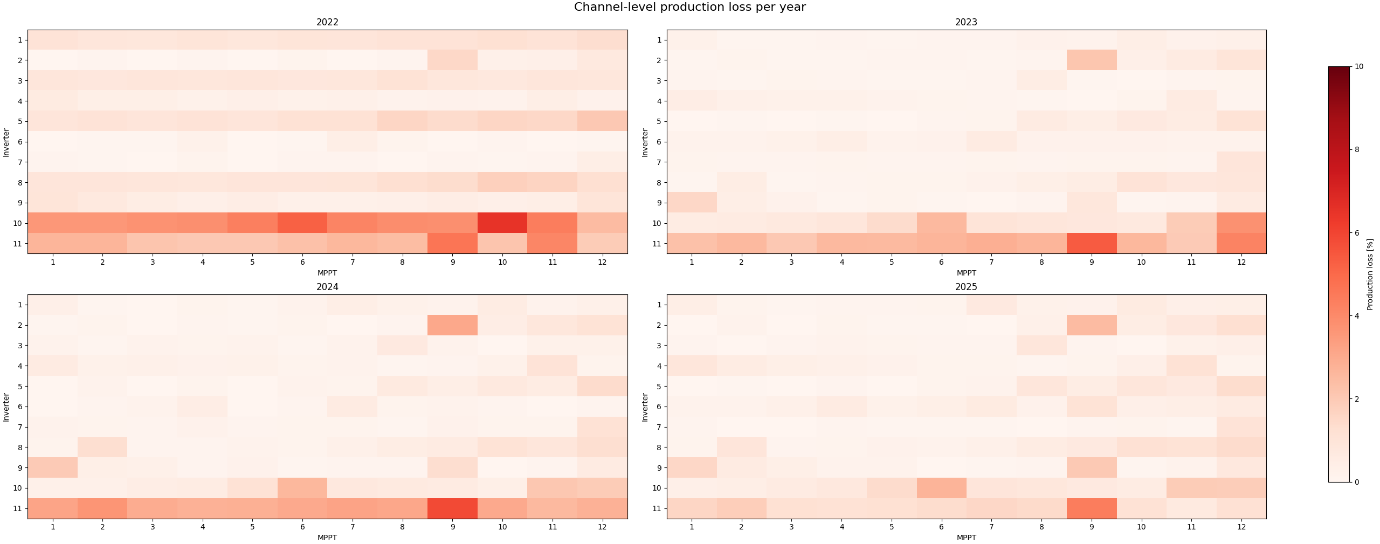
Beyond high-level indicators, the core value of PV Performance Assessment lies in understanding the origin of performance deviations. Detailed Fault Detection and Diagnosis (FDD) analyses are carried out to identify and quantify specific sources of energy loss. This may include, for example, the impact of shading, soiling, degradation, inverter clipping, curtailment, or extended unavailability periods. The objective is to distinguish between measurement artefacts, modelling assumptions, and genuine system issues affecting production.

 EN
EN
 English